G2025 Ends for Rural Telehealth on October 1. The Claim Now Needs the Service and the Channel.
From October 1, rural health clinics and FQHCs must replace the single G2025 telehealth code with the service performed and the correct audio or video modifier.
On September 10, 2026, CMS placed a near-term billing change in its Medicare Learning Network newsletter: for dates of service on or after October 1, rural health clinics and federally qualified health centers must stop reporting the single HCPCS code G2025 for distant-site telehealth. The claim must instead identify the individual CPT or HCPCS service and the appropriate telehealth modifier.
Modifier 93 identifies a synchronous audio-only service. Modifier 95 identifies a synchronous audio-video service. CMS says the service itself must be on the Medicare telehealth list and the claim must also carry the appropriate revenue code. The change is effective October 1, while the related system implementation date is October 5.
The payment method doesn't become code-specific merely because the claim becomes more specific. CMS says the 2026 distant-site telehealth payment rate for RHCs and FQHCs remains $97.53, based on the weighted average of services on the Physician Fee Schedule telehealth list. The operational change is in what the claim must describe, not a promise that each CPT code will pay its ordinary Physician Fee Schedule amount.
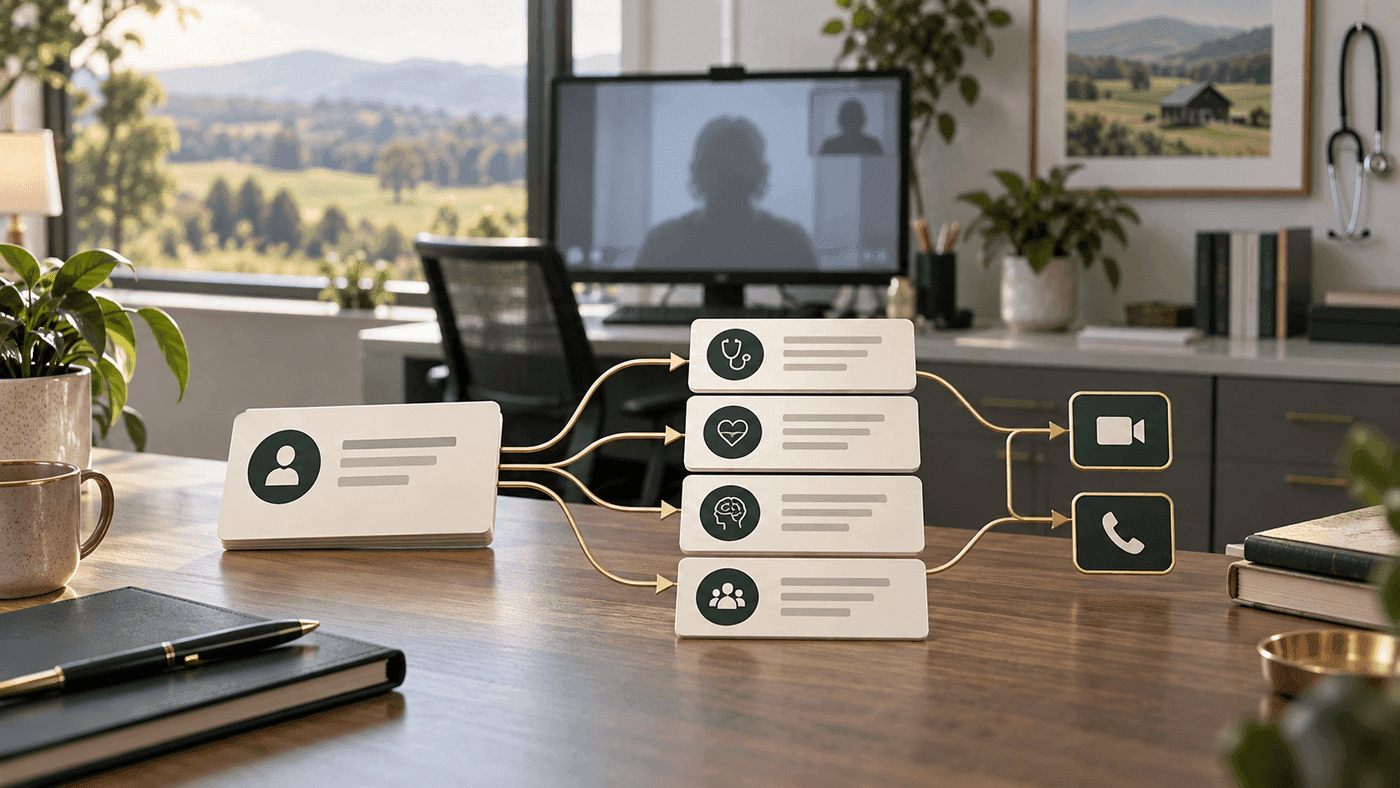
For a rural clinic, this is more than a code-table update. G2025 allowed several different telehealth encounters to arrive in billing under one label. From October 1, the record, charge, claim, modifier, revenue code, and approved telehealth list must agree on what happened and how it happened. A claim can now fail even when the visit was covered and the old G2025 workflow would have looked complete.
One Generic Code Was Hiding Several Decisions
A single billing code can make a complicated process appear simple. The clinician documents a remote encounter, the charge enters the queue, and billing reports G2025. The October change exposes the decisions that were already present: which service was furnished, whether Medicare lists it as telehealth, whether the connection was audio-only or audio-video, which revenue code belongs on the line, and whether the documentation supports each element.
That added detail can improve the usefulness of claims data. CMS says one reason for the change is to identify the specific services RHCs and FQHCs furnish, including for work with Accountable Care Organizations. But better data for Medicare begins as more exact work inside the practice.
The risk is highest where the visit platform, clinical note, charge capture, and claim edit live in separate systems. If the channel is known only by the person who conducted the visit, billing can't safely infer 93 or 95. If the encounter type maps automatically to G2025, the old code may continue appearing after the effective date. If the selected service isn't on the current telehealth list, adding a telehealth modifier won't make it payable.
Where the October 1 Claim Can Break
The safest preparation is to map the whole claim path before changing the final code. Each break below begins earlier than submission.
- The Old Default Survives: The scheduling or charge template still sends G2025 for an October date of service, even though the encounter now requires the individual service code.
- The Channel Is Missing: The note says telehealth but doesn't clearly establish whether the encounter was audio-only or audio-video, leaving billing without support for modifier 93 or 95.
- The Service Is Not on the List: A valid CPT or HCPCS code is paired with a telehealth modifier without checking the current Medicare telehealth-services list.
- The Revenue Code Does Not Match: The professional service detail changes, but the facility claim mapping is left under the old configuration.
- The Effective Date Is Applied to the Billing Date: A September service billed in October is converted to the new rule, or an October service is allowed through the old rule because the claim was created before the software update.
- Payment Is Modeled Incorrectly: Staff assume the individual service code will produce its ordinary fee-schedule payment even though CMS continues the separate RHC and FQHC distant-site payment method.
These aren't abstract compliance questions. They become returned claims, manual corrections, delayed payment, inconsistent patient cost sharing, and time spent reconstructing a visit after the people involved have moved on.
What to Change Before the First October Visit
Start with the telehealth services the clinic actually delivers. A complete national list is the source, but a short controlled map of the clinic's real encounter types is the working tool.
- Build the Service Map: For every common telehealth encounter, record the individual CPT or HCPCS code, the Medicare telehealth-list status, the revenue code, the allowed channel, and the documentation needed to support it.
- Make the Channel a Required Fact: Capture audio-only or audio-video during the encounter. Don't ask billing to infer it from a platform name, appointment type, or free-text note.
- Date-Limit G2025: End the old automatic mapping by date of service, not claim creation date, and keep the historical mapping available for earlier visits.
- Test Both Paths: Run one supported audio-only scenario and one audio-video scenario from scheduling through the generated claim. Confirm the service, modifier, revenue code, and date all survive the handoffs.
- Confirm Payment Logic Separately: Make sure expected reimbursement and patient-responsibility calculations follow the RHC or FQHC distant-site method rather than the ordinary payment attached to the individual code.
- Audit the First Claims: Review October telehealth claims before submission, then compare acknowledgements, returns, remittances, and patient cost sharing after adjudication.
A successful test isn't a code visible on a screen. It's a claim whose clinical record, charge, service code, modifier, revenue code, payment expectation, and payer response tell the same story.
The VOSKPO Approach: Rebuild the Claim Path, Not One Field
VOSKPO helps practices absorb billing changes at the point where the work is performed. For this transition, that means connecting the telehealth visit definition to documentation, charge capture, claim creation, payment review, and denial follow-up instead of issuing a memo that says G2025 has ended.
- Encounter-to-Code Mapping: We narrow the CMS list to the clinic's actual services and document the supported code, channel, revenue code, and effective date for each one.
- Front-End Capture: We make audio-only or audio-video a clear, required part of the visit workflow so the claim modifier is supported before billing receives it.
- Billing-System Alignment: We date-limit the old G2025 rule, update claim edits, and test that the new service detail passes through every handoff.
- Payment and Cost-Sharing Review: We separate service identification from payment methodology and check that expected reimbursement doesn't drift merely because the claim now carries an individual code.
- October Monitoring: We watch returned claims, remittances, denial reasons, and manual touches so the first exceptions improve the rule instead of becoming recurring rework.
The goal is a clean transition: no October service trapped in the old code, no supported telehealth visit denied because its channel or service was lost, and no misleading payment expectation attached to a more detailed claim.
The KPO Layer: Keep the Telehealth Map Current
This change also shows why Knowledge Process Outsourcing belongs beside medical billing. The Medicare telehealth list is maintained over time, while service definitions, modifiers, documentation expectations, software mappings, and clinic offerings can each change on a different schedule. A one-time build will eventually go stale.
- A Controlled Telehealth Register: Maintain the service, source, effective date, approved channel, modifier, revenue code, documentation requirement, and owner in one dated record.
- Source Monitoring: Watch CMS, Medicare Administrative Contractor, and payer updates for changes that affect the clinic's actual service map.
- Role-Specific Instructions: Give clinicians, schedulers, coders, billers, and managers the exact part of the rule they must act on without asking each person to interpret the full publication.
- Version History: Preserve the rule used for each date of service so a September claim corrected in October doesn't inherit the wrong coding logic.
- Feedback From Real Outcomes: Use claim returns and remittance patterns to refine the map without placing patient information in an ordinary knowledge file.
Before October 1, choose two common telehealth visits and trace them from the appointment through a test claim: one audio-only and one audio-video. If anyone has to guess the service, the channel, the revenue code, or the payment treatment, the workflow isn't ready. VOSKPO can include that trace in a Free Revenue Review and show exactly where the new Medicare rule stops matching the clinic's current process.
Sources
CMS, MLN Connects Newsletter for September 10, 2026
The October 1 change from G2025 to individual CPT or HCPCS service codes; modifiers 93 and 95; and the 2026 payment rate and methodology
CMS, Change Request 14468, Transmittal 13776 (27 May 2026)
The October 1 effective date by date of service; October 5 implementation date; service-list requirement; revenue-code and modifier instructions; payment, cost-sharing, and claim-processing rules
CMS, Medicare Telehealth Services List
The official list CMS directs RHCs and FQHCs to use when identifying eligible distant-site telehealth services
All figures are as reported by the sources above at the time of writing. Outcome statements reflect typical client engagement outcomes and are not guarantees.
Related reading
- Medical Coding for the 2026 CMS Fee Schedule
288 new CPT codes took effect January 1, 2026. Here is what changed in the CMS fee schedule, why most practices fall behind, and how to capture the new revenue without inviting an audit.
- Raise Your Clean Claim Rate: Beat Eligibility Denials
56% of denials trace back to patient eligibility, not coding. Here is why continuous verification, not better coding, is the fastest lever on your clean claim rate in 2026.
- Why Claim Denials Are Surging in 2026: The Triple Threat
Prior authorization, NCCI bundling edits and payer AI are converging on claims at once in 2026. Here is the three-force breakdown, and the prevention plan that stops all three before they become denials.
Want to put these ideas to work?
Talk to our team about a free revenue review and see where your revenue cycle can improve.
Request a revenue review